Neuroscience and Creative Wellness: Reconnecting Head, Hand, Heart
It’s finally here, creative wellness that allows us to reconnect with own our head, hands, and heart. Its ingenious almost unbelievable except it is true. In fact, science supports the idea of holistic wellness through simple creative tasks. As a creative individual, Akos Creative goal has all along been this: to craft herself to ttal wellbeing.
This year brought challenges that also buttressed my believe in creative outcomes. Generally, people create by hand wih the end goal of having a product. However, as it unfolded in 2016, and again the middle part of the year, creating mindfully brought with it, healing and recovery.With my first hand experience in creative healing, I will admit it outstands how effective it is. Similarly, these health outcomes in art and creativity is well known in both contemprary and tradtional contexts.
Creative Workshops & Mindful Making
The steady growth in in art and mindful making, has led to creative sole-preneurs transition into the workshops space. Hands-on learning and activities do bring people together and thereby serving multiple purposes beyound creation. As result, growth in the popularity in exploring creative wellness is worldwide. In this context, the mindset shift is more towards a sustainable balanced and meaningful living.
Perhaps we are beginning to rediscover something that earlier generations already understood.
Our hands, hearts and minds are connected.Our hands, hearts and minds are connected. As result, creative wellbeing and creative coaching are gaining attention. In fact, more people’s now look for new ways to support their wellbeing and manage the pressures of modern life. Hence, moremillenials, are learning to reconnect with themselves.
When we make something with our hands, we use our minds to imagine, plan and solve problems. More over, we may also connect with our feelings, memories, culture and sense of purpose. This is the start to the journey of creative wellbeing where individuals improve general health without medicine.
In fact, the idea behind minful art is what I call the hand-heart-head connection. Whilst our hands help us create, Oour hearts bring feeling, care and meaning. Additionally, our heads help us do the thinking, learn and make choices. When these parts of our experience work together, making something can become more than a task. It can become an opportunity to slow down, express ourselves, learn and enjoy the present moment.
Neuroscience and Wellbeing
Knowledge around neuroscience is advancing with more research findings wellbeing and how to achieve it. Most of these research seek to explain in simple terms the links between our human brain, bodies, emotions and everyday activities.
Whereas scientific research suggests the importance of doing, it emphasises on those activities involving attention. It also highlight the benefit of human movement, learning and social connection. In fact, it is such a relieve knowing that science testifies how these actions can contribute to different aspects of human wellbeing. Hence, most hands-on creative activities may also offer opportunities to practise focus, problem-solving and new skills.
This does not mean that every craft activity will reduce stress or improve mental health for everyone. The experience depends on the person, the activity and their circumstances. However, it gives us good reason to take everyday creativity seriously. So, what was once a normal part of daily life is now something many people need to make time for.
From a culture of making to a culture of consuming
Consumer culture has over the culture of hand making the things we use everyday. Since our fore fathers, made most things by hand, they experienced the joy of crafting than we do now. In fact, we don’t need to look far to get the point I am raising here.When we look at modern life, we can see how much has changed.
In fact, we live in a world where many things are ready-made. Whereas the lifestyle demands that we can order clothes, household goods and gifts with a few taps on a phone, we even forget how everyday things are made. More over, we fall short of appreciating the time and effort it takes to put together many of the items we use around our homes. Its become a life style choice, I am am guilty of this too.You see, we all often default to buying what we need rather than make it ourselves. Its easier, and we ll move on to our daily preoccupations.
But I believe that convenience has its place. Let’s take for example modern products and services. In fact, they do make life easier and can allow time to focus on other important things. However, somewhere along the way, many of us have had fewer chances to learn by making. Even to repair what we own, work with our hands or learn a practical skill from another person.
Now, o speak from personal experience, we have become very good at consuming things. Yet we may have fewer opportunities to experience the satisfaction of creating them. That is why I believe in making something ourselves. It is one of the best ways to invite us to take part rather than simply receive.
Moreso, making things allows us to choose, experiment, make mistakes, solve problems and try again. It reminds us that we are capable of learning and bringing ideas to life. This is one reason I believe creative wellness deserves a place in modern life. We do not need to reject technology or stop buying things. We can simply restore some balance by making room for creativity.
My childhood in Accra, Ghana: A life closer to making
I would like to share abit about my childhood growing up in Accra, Ghana before I mgrated to Australia as an adult. The truth is, I experienced a way of life where handmade things were part of everyday living. In fact, many of the things we used at home were made by hand. Sometimes, a family member made them. At other times, we bought them from local makers who used their skills to earn a living. And I remember a world where practical skills mattered.
As in most parts of Africa the art of making was part of daily life. For instance art and craft that produces items for daily use. When items wear out, they are repaired for re-use. In a way creative wellness, not only served the objects per say, it had posiive impact on the people that used the objects too. Handmade work was not always seen as a special hobby. It was simply part of life. For example, we could buy soap made by a local maker. We could visit a seamstress to have our clothes sewn. I remember the excitement around Christmas dresses, made with care so we could wear something special for the celebration.
Behind these everyday items were people with skills, knowledge, creativity and pride in their work. The seamstress was doing more than sewing fabric together. She was turning an idea into something we could wear. The soap maker was using knowledge and practical skill to create something useful for the home.
These makers were part of the life of the community. Their work helped families meet everyday needs, while their skills provided a way to earn a living. Looking back, I can see how much learning and creativity were woven into ordinary life.
We did loose something along the way, didn’t we?
As the world has changed, many of us have moved further away from these everyday experiences of making. Over time, we have become accustomed to buying ready-made goods. Some traditional skills are practised less often in certain communities. Busy work schedules and family responsibilities can leave little time for hands-on activities.
Additing to this, we may also have fewer opportunities to learn practical skills from older generations or local makers. I do not believe that the past was perfect or that we should return to every old way of living. Modern life brings many benefits.
But I do believe there is something valuable we can carry forward and I hope you can understand why. You see, we can keep the knowledge, creativity, resourcefulness and human connection. As humans lving in communities, we are a part of everyday making already. As result, while finding new ways to use them in the world we live, we also forge a sustainable lifestyle. A great way to live sustainably is to mend instead of discard. There are several ways to achieve this.
Take for instance, when we an upcycle instead of always buying new. We can learn a craft, share a skill or make something meaningful for someone we love. What about creating opportunities for our hands, hearts and minds to work together again?
Creativity is part of Who We Are
For me, this idea also connects with my Christian faith.
God is creative. Which is why In the Bible, the opening story of Genesis presents God as Creator. Religious text is thereby acknowledging that creativity did bring the world into being. As result of creation, we see the beauty and variety of creation all around us. Such as the sky, the land, the sea, plants, animals and human life. Is’nt this amazing?
As people made in God’s image, we can reflect creativity in many ways. We can imagine, design, build, sew, paint, write, cook, garden and make things that bring beauty or serve a purpose.
We do not all have to be professional artists. Creativity can be found in the everyday choices we make and the care we put into our work.
A mother sewing a dress for her child, a maker creating soap, a person repairing an old chair or someone stringing colourful beads into a bracelet is using imagination and practical skill.
There is value in these small acts of creation. Well, for me creativity is not only about what we produce. It is also about the experience of making, learning and sharing.
It can be a way to appreciate the gifts we have, care for the resources around us and connect with other people.
Why this matters for Mending Space
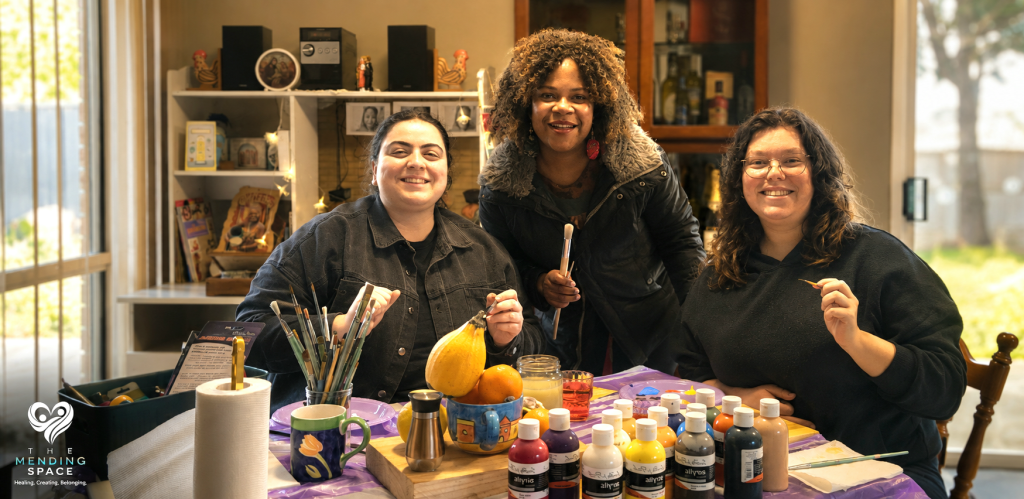
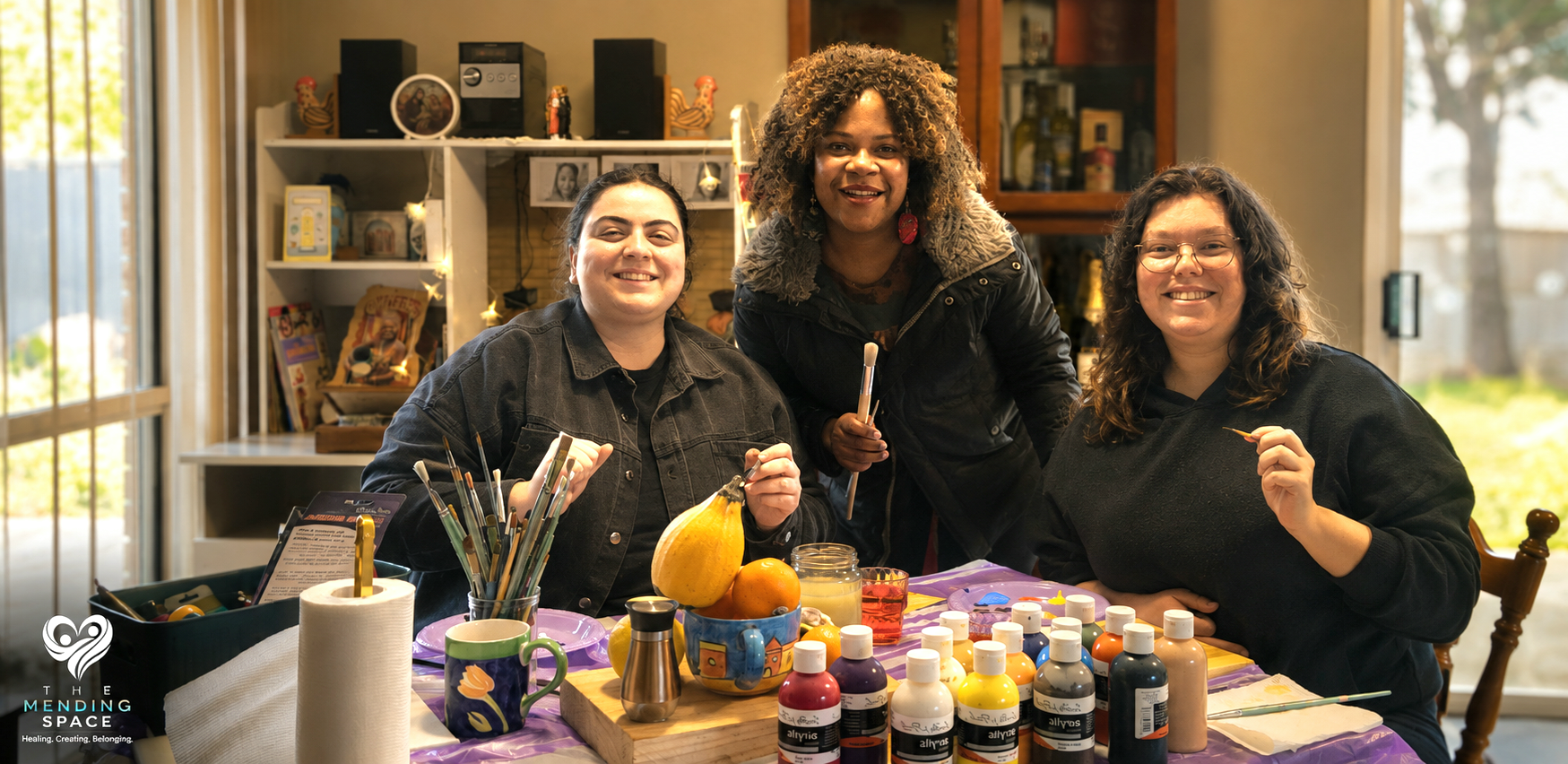
This is part of the thinking behind my Mending Space program. You see, I want to create opportunities for people to rediscover the value of making things with their hands. In fact, creative wellness starts with simple steps at home. In my opnion, creating safe spaces such as one for mending, is such as powerful resource for our wellness. Especially, facilitated spaces purposely created help with personal reflection, mindfulness and most importantly personal growth.
Take for instance arts and crafts. A beading activity simple as it may seem, is one of those activities that invite us to slow down. Mindful pacing of our time is helpful in making choices, and also focus on a task. If you ask me, this is how we learn, and allow the huan breain to create new neuro pathways. In fact, the Mending SPace program is designed to help us learn something new.
Another example of mindful creation is working with recycled materials. Recycled materials are those items we discard because we can’t find use for them. But if we pause and reflect on what other uses there might be with waste, we may find new ways to use them. In act, this is exactly how we can encourage resourcefulness and remind us that something old may still have value. Its not only a lifestyle choice, upcycle, recycle and repurpose is a wellbeing choice.
I have faciliated groups in community services for several years and can tell you how powerful group spaces can be. Taking part in a group activity can create opportunities to share skills, meet people and enjoy a common interest. Especially when creative group activities are thoughtfully combined with mindfulness, personal reflection or appropriate social work support, they can form part of a wider approach to creative wellbeing.
This is not about claiming that crafts can solve every problem. It is about recognising that meaningful activities, practical skills and human connection have a place in a balanced life. Through Mending Space, I hope to explore how we can bring these experiences back into our modern routines.
Creative Wellness : a new balance for modern living
Imagine a world where we make a little more time to create for wellness. Thereby, instead of always buying a new item, we might repair something we already own. Also, instead of throwing away every fabric scrap, we might turn some of it into something useful. Or, instead of rushing through every day, we might set aside time to make a bracelet, plant a garden or learn a new skill. In fact, creative wellness can be viewed in multiple ways.
Although these steps will not necessarily change everything overnight, creative wellness approaches are valuable to community. But they can help us make room for learning, enjoyment and connection.
That is the balance I want to explore through The Healing Thread: bringing together the practical joy of making, the meaning we give to what we create and the knowledge that helps us grow. In fact, our hands can help us make. Our hearts can help us connect. Our heads can help us learn and choose our next steps.
Perhaps the future of wellbeing includes rediscovering some of the wisdom that was already present in the everyday lives of our parents, grandparents and communities.
We do not have to choose between modern life and handmade living. We can bring the two together.
And sometimes, that reconnection can begin with something as simple as a bead, a piece of fabric or the decision to make something with our own hands.

- admin